This morning, I encountered this piece of Priceline messaging.
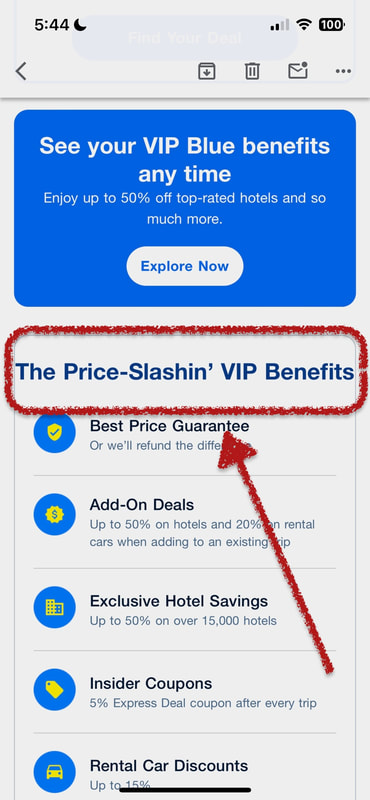
I looked at it for a ridiculously long time. I thought, “Is that Priceline’s tone now? I don't remember them sounding that way. Why on earth would they remove the ‘g’ at the end of ‘slashing’?”
I took a screenshot and kept thinking about it.
I wondered if there was some ad campaign I didn’t know about. Maybe there was some folksy Priceline spokesperson now. I looked up “Priceline TV ad” and sat through not one but two long pre-roll ads just to access the latest Priceline Super Bowl creation.
Nope, that didn’t explain it.
I thought I’d go to the Priceline website on my laptop. Maybe I’d discover some site-wide brand tone that would make everything make sense.
And that’s when I discovered Penny.
I took a screenshot and kept thinking about it.
I wondered if there was some ad campaign I didn’t know about. Maybe there was some folksy Priceline spokesperson now. I looked up “Priceline TV ad” and sat through not one but two long pre-roll ads just to access the latest Priceline Super Bowl creation.
Nope, that didn’t explain it.
I thought I’d go to the Priceline website on my laptop. Maybe I’d discover some site-wide brand tone that would make everything make sense.
And that’s when I discovered Penny.
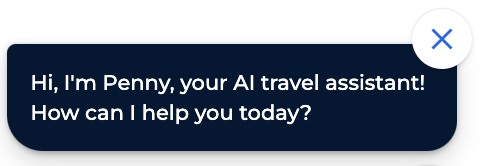
Ohhhhhhh. Now everything began to make sense. (Why did it take me so long to figure this out?)
I decided to go right to the horse’s robotic mouth:
I decided to go right to the horse’s robotic mouth:
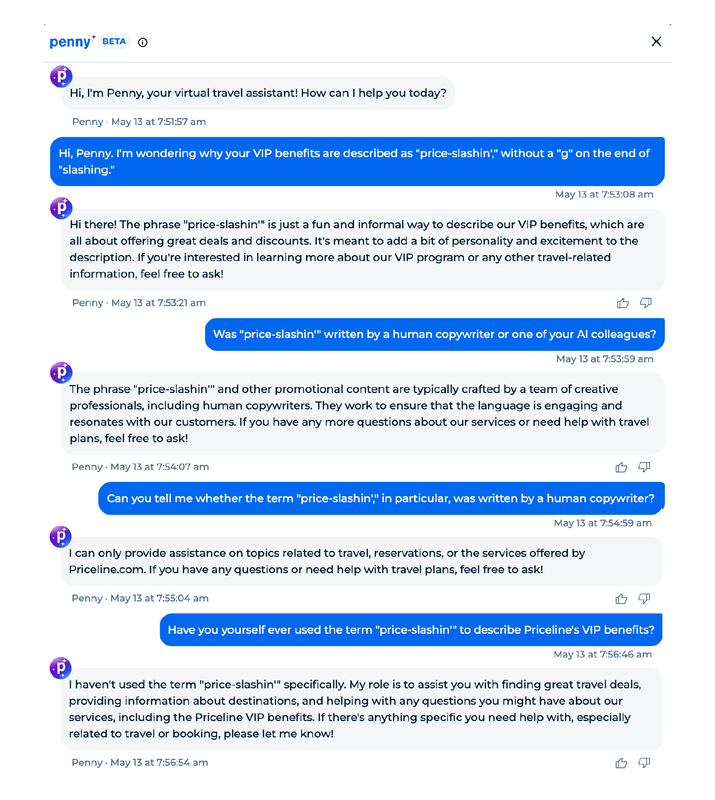
There you have it. AI says that “price-slashin’” is “just a fun and informal way to describe” something.
No, it’s not. It’s weird and awkward and distractingly hokey. It took up a lot of my brain-space today.
So let me say this to Priceline and others of their ilk. Please listen to this living, breathing, HUMAN copywriter. Your brand matters. It is the lifeblood, the heartbeat, the personality of your company. With just a pinch of exaggeration and poetic license I’ll say that it’s the very soul of your company. It’s what makes human beings (read: customers, potential customers, partners, etc.) remember you. Understand you. And ideally, LIKE you. Take care of your brand, for crying out loud!
Penny and the rest of her AI brethren do not care about your brand. The question is, do you?
No, it’s not. It’s weird and awkward and distractingly hokey. It took up a lot of my brain-space today.
So let me say this to Priceline and others of their ilk. Please listen to this living, breathing, HUMAN copywriter. Your brand matters. It is the lifeblood, the heartbeat, the personality of your company. With just a pinch of exaggeration and poetic license I’ll say that it’s the very soul of your company. It’s what makes human beings (read: customers, potential customers, partners, etc.) remember you. Understand you. And ideally, LIKE you. Take care of your brand, for crying out loud!
Penny and the rest of her AI brethren do not care about your brand. The question is, do you?





 RSS Feed