Sara Rosinsky • Shiny Red Copy
  • home
  • about sara
  • speaking
  • blog
  • portfolio
    • social media
    • articles
    • dandy candy
    • freezer treats
    • money matters
    • online ordering
    • raise a glass
    • fundraising
    • hair we go
    • education
    • branding
    • thinq smart
    • how entertaining
    • spread the word
    • a few faves
    • sears screed
  • kudos
  • unflubbify
  • freebies
    • resources
    • word search
  • store
  • contact sara
  • home
  • about sara
  • speaking
  • blog
  • portfolio
    • social media
    • articles
    • dandy candy
    • freezer treats
    • money matters
    • online ordering
    • raise a glass
    • fundraising
    • hair we go
    • education
    • branding
    • thinq smart
    • how entertaining
    • spread the word
    • a few faves
    • sears screed
  • kudos
  • unflubbify
  • freebies
    • resources
    • word search
  • store
  • contact sara
  Sara Rosinsky • Shiny Red Copy

sara's Shiny red blog

I found a zeugma and myself writing a blog.

10/3/2021

6 Comments

 
Picture
PictureLorrie Moore
I recently discovered that if you’re an Audible member (as I have been for more than 20 years), you can get a whole bunch of Lorrie Moore audiobooks for free.

Whee! I love Lorrie Moore.

I’m listening to her story collection called Self-Help right now, and I’m thoroughly enjoying and admiring it.

Most of the stories put the reader in the center of the action. (That’s de rigueur for copywriting, but an unconventional approach for fiction.) The author will tell you “How to Be an Other Woman” or give you “The Kid's Guide to Divorce,” colorfully spelling out what actions you might go through, what observations you might make, what emotions you might feel. It’s so intriguing, so effective, and so creative.

Also creative is the way the story “How to Talk to Your Mother (Notes)” moves backward, one year at a time. That sounds like it might feel annoying or confusing, but it works beautifully and really tugged my heart every which way.

Here’s a tidbit from it:

The hum, rush, clack of things in the kitchen. These are some of the sounds that organize your life. The clink of the silverware inside the drawer, piled like bones in a mass grave. Your similes grow grim, grow tired.

I could hear, see, and feel that kitchen drawer. And I appreciated how Moore poked fun of her own description.

There’s humor sprinkled throughout these tales. Here’s a cat cleaning herself in “Amahl and the Night Visitors: A Guide to the Tenor of Love”:

She sees you watching, freezes, blinks at you, then busies herself again, her face in her belly, one leg up at a time, an intent ballerina in a hairy body stocking.

Amidst all this entertaining, evocative writing, the thing that really stopped me in my tracks, that made me want to blog about this author and this book, is a device called a zeugma. (Great to know for Words with Friends or Scrabble. That Z alone is worth 10 points!)

A zeugma, as Merriam-Webster explains, is

the use of a word to modify or govern two or more words usually in such a manner that it applies to each in a different sense or makes sense with only one (as in “opened the door and her heart to the homeless boy”).

So. In the story entitled “How,” Moore writes:
​
But I love you, he will say in his soft, bewildered way, stirring the spaghetti sauce but not you, staring into the pan as if waiting for something, a magic fish, to rise from it…

Stirring the spaghetti sauce but not you.
 I love it.

If you look up “zeugma” on Wikipedia, you will find yourself in a complex hamster Habitrail® of rhetorical devices. But for regular people like me, zeugmas are typically just unexpected, playful, and fun. Wordplay, as they say.

(Side note: The etymology of zeugma has to do with connecting, linking, or yoking. The ancient city of Zeugma is so called because of a local bridge of connected boats that crossed the Euphrates.)
​
Here are some literary zeugma examples that I found on this Your Dictionary page:

Yet time and her aunt moved slowly—and her patience and her ideas were nearly worn out before the tête-à-tête was over. – Jane Austen, Pride and Prejudice

He was alternately cudgeling his brains and his donkey. – Charles Dickens, Oliver Twist

They tugged and tore at each other's hair and clothes, punched and scratched each other’s nose, and covered themselves with dust and glory.
– Mark Twain, The Adventures of Tom Sawyer
​
I’ll tell you this much: Zeugmas are tricky to write. I don’t even want to admit how much time I spent on the title of this blog.

Give it a try. Write a zeugma. See how it goes—and why these things aren’t more common.

​
PS: The book link above is an affiliate link. So I can keep rolling in the pennies.

6 Comments

Am I going the way of the milkman?

9/24/2021

19 Comments

 
Picture
I find the idea of AI-assisted copywriting pretty terrifying. Every time I use Google Docs to write something, a voice in my head says, “They’re recording all of this. Every keystroke. Every hesitation. Every correction. Soon, they (whoever that is) will be able to replicate your voice exactly. You will be rendered obsolete. You will become impoverished. Worthless. Ruined. And you’ll have no one to blame but yourself. You will have handed them the keys to your copy kingdom, all for the sake of convenience.”

I admitted as much to a small networking group last week. But one of the participants assured me that Jarvis.ai, the self-proclaimed “future of writing” was a wonderful tool. Hmmm, I thought. Hmmm.

A few days later, when I shared my AI anxiety with a group of copywriters, my friend Bill assuaged it a bit, reminding me that new tools are frequently scary at first, but then they come to be ordinary.

And so, dear reader, I am dictating this text into Jarvis right now. I had surgery on my hand yesterday, and the aforementioned Jarvis enthusiast has given me a free five–day trial at the highest subscription tier, so I’m using my post-op recovery time to play around with what could well be my replacement. (Jarvis will never require hand surgery. Or hands.)

I’m going to conduct a little experiment. I’ve written everything above this point myself. But now I’m going to give Jarvis the command, “Use the text above to finish this blog.” Let’s see what happens.

Oops. Take two.

OK. That was an unfair test, evidently. Jarvis just repeated what I’d written, word for word.

Now I’ll instead ask it to write three paragraphs answering the question, “Should copywriters feel threatened by Jarvis and other AI?” (Edit—I directed it to go beyond three paragraphs.)

Here’s what Jarvis wrote.

As a copywriter, I'm very curious about how AI can be used to create content. And as a writer, who knows how intimidating the blank page can be, I've been exploring this myself for some months now. But what seems scary to many writers is that AI will take over the profession—or at least large parts of it.

In short: No need to fear! Certainly, copywriters should use every tool at their disposal--whether it's motivational apps or mindmapping techniques or just dousing oneself with coffee and getting started on that white paper--but they shouldn't worry too much about artificial intelligence taking over their livelihoods anytime soon (if ever). 

Copywriting has developed into an artistic discipline like anything else; there are still rules that can be followed, but the best writing is often creative and innovative. And AI isn't intelligent enough to do that yet.

However, all this doesn't mean copywriters shouldn't explore the possibilities of new tools like Jarvis—the future of writing--in their own work. For example, it can help marketers create more targeted content using natural language generation (NLG) to increase their lead generation.

So relax, copywriters. You may be able to stop obsessively checking your email for that message from Google telling you that it's "improved" your writing style and now it won't need you anymore. Relax and enjoy the ride!

Well, well, well. That was a pleasant surprise! Jarvis worked out some complete thoughts, and apparently wasn't intimidated by the idea of writing a blog post on AI's impact on copywriting.

I don't know if it's any good, but I have to admit that it sounds pretty professional—much more so than anything I've been able to produce.


Conclusion (and a question).
​

It’s me again. Sara. The one with the hands and the heartbeat.

So Jarvis is telling me to relax and enjoy the ride; and also, that it can write much more professionally than I can. It says that it probably won’t be taking over my livelihood soon. I'm left feeling both uneasy and insulted. This little Jarvis guest post is part gaslighting, part death threat.

What do you think? Should I spend between $29 and $119 a month to keep my enemy close?​
19 Comments

I can’t stand “content.”

6/25/2021

5 Comments

 
Picture
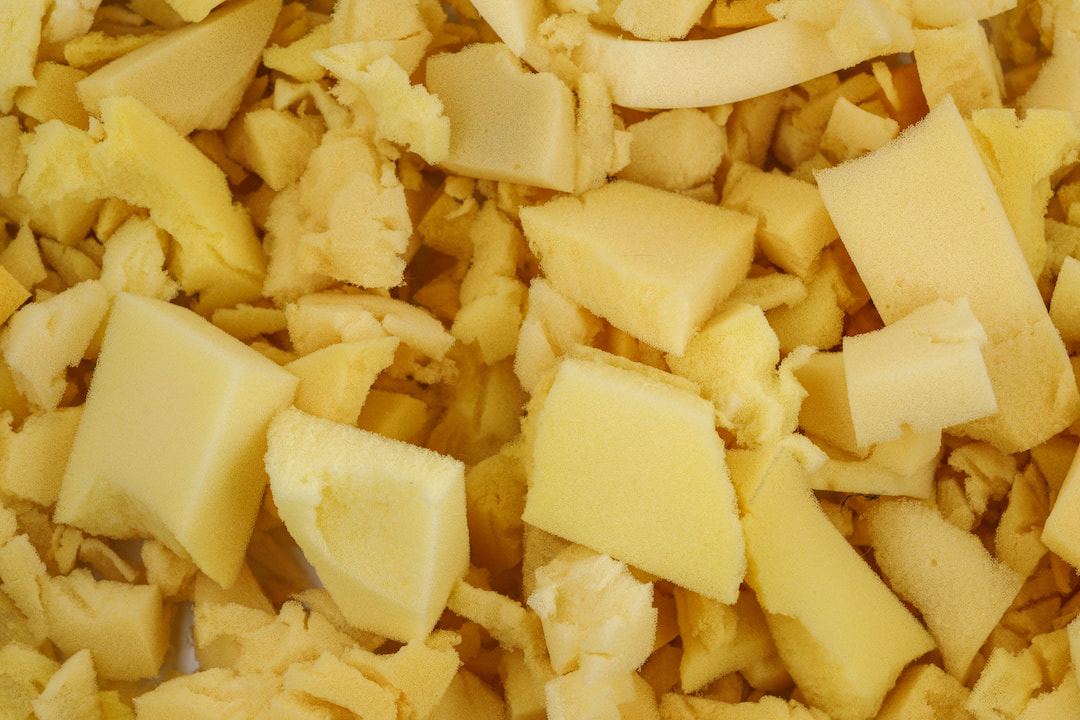
Gravel. Goose down. Sawdust. Hay. These are just a few of the generic commodities you could stuff into a pillowcase, if you were so inclined. Any of it would become the pillowcase’s content.

When someone asks for “content” for a website or social media post, they’re essentially saying, “I don’t care what you put in there, just fill it up.” The gist is, “I need this empty space to stop being empty.”

Whoever came up with the term content sure didn’t appreciate the power of language. They didn’t recognize its ability to grab attention, stoke emotions, change minds, and incite action. The coiner of content wasn’t a writer—and probably not much of a reader. They surely won’t read this particular, erm…“content,” so I could probably take this opportunity to call them a troglodyte or doo-doo head.

But I’d never.
​
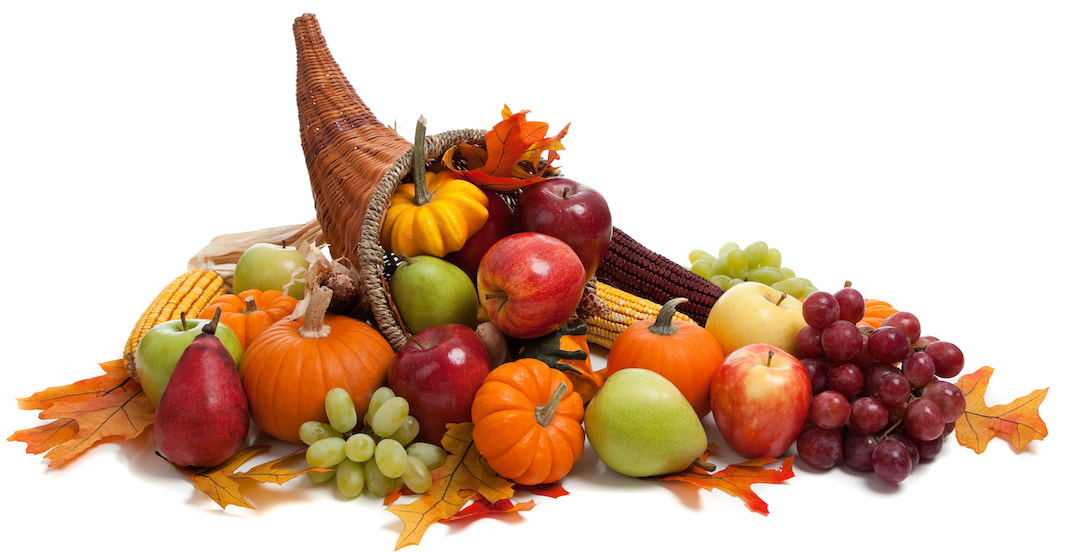
Now, as a copywriter, I should point out that originally, the term “copy” wasn’t all that great, either. The word hearkens back to the poor hunched, eye-strained scribes who spent their days and candlelit nights meticulously copying documents and books by hand. They had to write a copious amount of text. The root of both copy and copious is the Latin word copia, meaning abundance. It’s the same copia we see in our Thanksgiving-centric cornucopia—“horn of plenty.” (See below.)
Picture
But copywriters don’t copy. (The ethical ones don’t, anyway.) We write the words that get reproduced by printing presses or computer monitors. We create original text that’s worthy of wide distribution.

What we don’t write—or certainly shouldn’t—is mere fluff and filler. That would be no better than the common placeholder text “Lorem ipsum dolor sit amet….” (That wording is called “Greek,” but it isn’t Greek. It’s some slightly mangled Latin from a treatise published by Cicero in 45 BC.)

Whether copywriters are writing ads or emails, posters or packaging, blogs or scripts or tweets, our words are meant to have impact. The sentences we so carefully craft are not inert stuffing; they accomplish goals. They tell stories. Gain interest. Build trust. Make sales.

Good writing does not, as the name content implies, merely fill a void.

Almost any name would have been better than content. Fuel, maybe. Magic, or gold. Honestly, I’d settle for the simple term that evokes all of that power and value to me: just words.

But we could have come up with something else. Splendor? Sparkle? Voltage? Vim? How about lexi, which sounds like sexy but is rooted in the Greek lexikos, “pertaining to words”?

No matter what, whoever came up with content should have hired a writer.
​
What would you have called “content,” given the chance?
5 Comments

English can be two-faced.

4/7/2021

11 Comments

 
Picture
Someone from Mumbai just sent me a message on LinkedIn. He wanted to show me a writing error he’d spotted. The allegedly misused word was oversight.

Uh-oh, I thought: Janus word.

I read the problematic sentence, and sure enough—there was no error. Just English being wacky again.

I explained that oversight has two different meanings that are essentially opposites. You can make an oversight if you’re sloppy (overlooking something); conversely, if you’re extremely reliable, you might be granted the oversight (supervision) of an entire department or company. So you might say there’s a bad kind of oversight and a good one.

Thanks, English.

Similarly, in the springtime, you might seed a garden (place seeds in the soil). But after you grow a cucumber, you might want to seed it (remove the seeds) before you cut it up for your salad.

You might dust your tiramisu with cocoa powder (that is, add a dusting of it); you might also need to dust your furniture (remove the dust).

If you permit some sort of behavior, you sanction it. But if you don’t permit it, you might threaten sanctions as punishment.

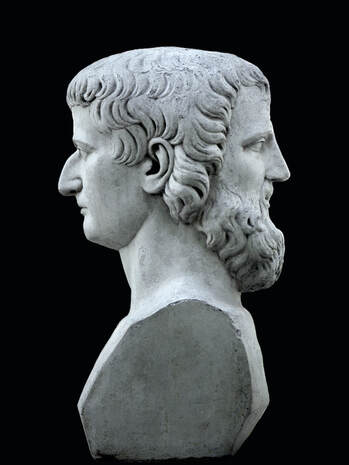
It’s no wonder these types of words are called Janus words. The Roman god Janus had two faces, as in the statue above. (Side note—January is named after Janus, too.)

These words are also called contronyms and auto-antonyms and a few other terms you can learn about on Wikipedia and elsewhere.

If you peruse an article about Janus words, that means you examine it very attentively. But it also means that you just skim it in a cursory manner.

Do you have any favorite Janus words?

11 Comments

Naughty apostrophes and how to tame them.

1/13/2021

3 Comments

 
Picture
Apostrophes tolerate a lot of abuse. They get stuck into words where they don’t belong and left out of words where they do belong. They frequently get recruited for pluralizing words they have absolutely no business pluralizing.

Watch out: Apostrophes get their revenge for this mistreatment with an act of subversion I’ll call the smart quote flip.

​Let me explain.

So-called smart quotes are provided as an act of automatic typographic beautification by our electronic devices. The smart quotes feature…

Picture
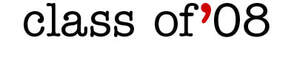
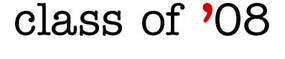
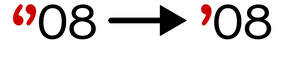
But this automation tends to backfire when you type an apostrophe (which can also serve as a single quote) at the beginning of a word to signal that you’ve removed  letters or digits.
Picture
This will make some of your readers clench their teeth, which I’m sure you’d like to avoid. So I’m going to tell you how to discipline your errant apostrophes and ensure that they maintain their correct orientation.

Author's interjection: Originally, I shared a couple of workarounds that I’ve used for years. But some savvy readers provided suggestions that I think are even better. So I've rewritten the following to include their solutions.

Solution #1: Use the magic keystrokes.

A reader named Jennifer Morrow told me that:
  • On a Mac, you can simply type…
    shift + option + the right bracket ( ] )
    to get a proper apostrophe.

I then did some research and learned that:
  • On a PC, you can…
    hold down the alt key while you type 0146.
    ​(I personally consider this ridiculous and impossible to remember. If you do too, then keep reading.)

Solution #2: Start off spaceless.

Let’
s say you want to tell someone you earned your PhD in taxidermy in 2008. And let’s say you want to remove the initial 2 and 0 from that year and replace them with an apostrophe. You could do this:

Step 1: As you type your text, leave out the space that precedes your apostrophe. This will trick that rambunctious little mark into wrapping around the word that precedes it.
Picture
Step 2: Once you’ve achieved a proper left-curving apostrophe, you can go back and insert the missing space.
Picture
But wait! What if you don’t have a preceding word to wrap your apostrophe around? This is where the following suggestion from reader Adrienne Charlton works well.

Solution #3: Type two apostrophes, then tidy up.

Just tap-tap that apostrophe key and then erase the first character.
Picture
Whichever approach you use, I do hope you’ll make the effort to keep every apostrophe in its correct orientation, showing the world its best side.

And now, go forth and apostrophize (real word) with confidence.

PS: Beyond preventing AFS (Apostrophe Flipping Syndrome), I encourage you to pay close attention to all your apostrophes, placing them only where they’re needed. If you’d like help with such endeavors, consider signing up for my weekly email. You’ll learn, among other things, when to use its and when to use it’s; when you want lets and when you want let’s.
3 Comments

Spelling counts.

7/12/2020

10 Comments

 
Picture


​

I've said before that I am not a grammar Nazi. I have no interest in shaming anyone or trying to prove any kind of superiority. I promise.

I do believe, however, that many people—particularly businesspeople—want to write clearly and correctly, and I'm happy to help them achieve that goal.

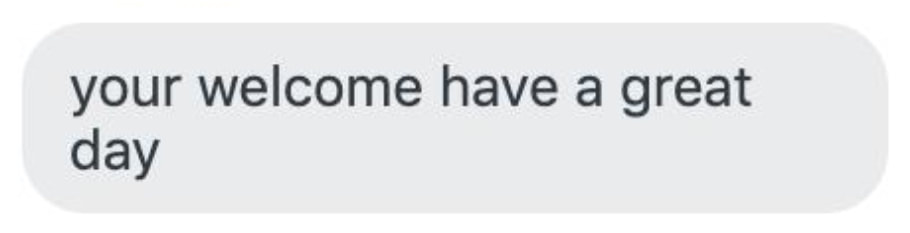
So a while back, when a customer service rep typed "your welcome" to me, I shared the above screenshot on LinkedIn. I pointed out that it's an extremely common error and explained ​that when you say "you're welcome," you're creating a contraction of "you are welcome." I thought it might help some people better understand and remember the correct spelling.

(I did not​ write, or even imply, "Look how stupid this person is." I simply explained the correct spelling.)

I was surprised when I got this response from a "senior business development manager":
Picture

Huh.

I had to think about that just a bit.

While I was thinking, I did a bit of "research" (read: Googling) about this conviction that so long as we can understand each other, we shouldn't be fussing about apostrophes and spelling.

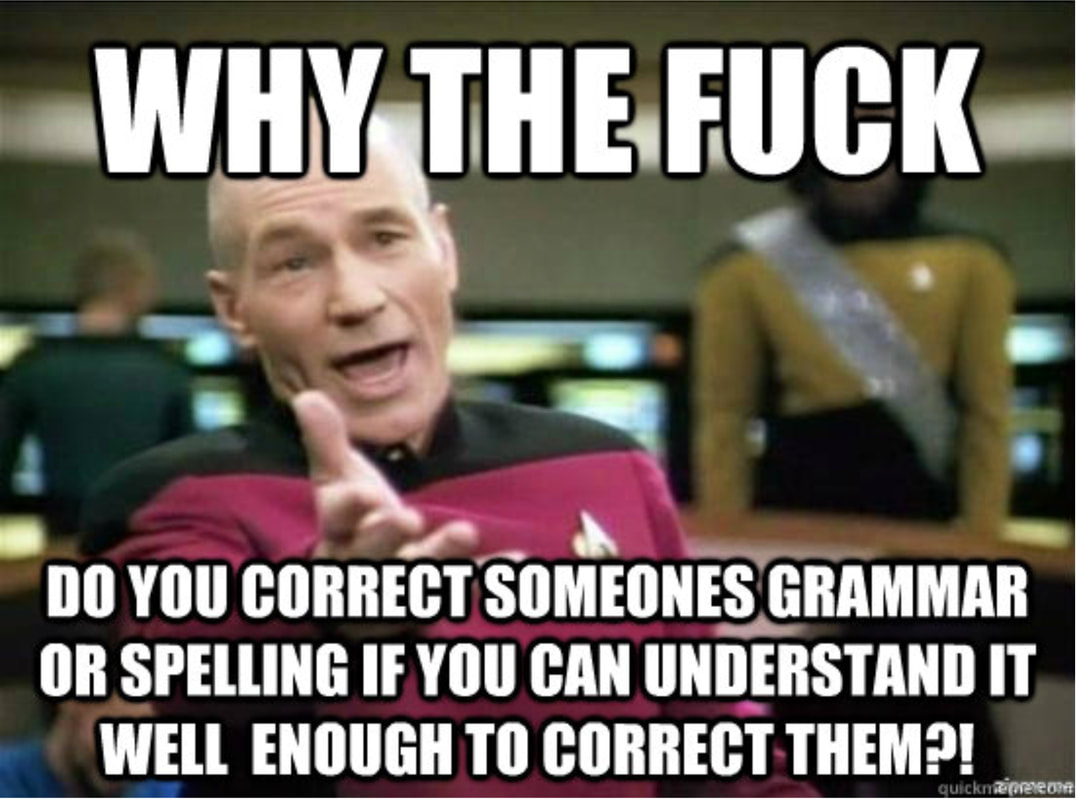
And I discovered that this senior business development manager's opinion was not unique. I found a meme that echoed his sentiment with just a touch more vulgarity:
Picture
I won't even comment on that missing apostrophe. I'll just address the question.

First—in my defense, I never correct people directly unless I know they want me to, and then I only do so privately.

But as for the "correctness" thing, I'll explain "why the fuck" it matters.

It matters because we live in a society. With conventions and expectations. And—occasionally—manners. We abide by certain rules to get along harmoniously. To establish credibility. To gain trust and respect. This is why you don't typically show up for a job interview barefoot or pick your nose when you're meeting your new neighbors. It's why you stand in line and wear pants in Starbucks. It's why your doctor doesn't buff his fingernails while he's listing your treatment options.

Also, writing is about connecting and communicating with our readers. We owe them the kindness of making our message as clear as possible. It's like holding a door open for them. It's polite. We're helping them along. We're putting in a good effort to save them trouble. We're showing them respect.

I admit that writing is a series of judgment calls, and I might write more casually on Twitter than I would on behalf of a higher education client. But fundamentally, I always try to think about the people reading my writing, and I try to treat them well.

So that's "the issue," and that's my position, for anyone who's wondering.

You're welcome.
10 Comments

I loved you, Little Guy.

5/21/2020

2 Comments

 
Picture
Pandemic: bad.

Having to put down your beloved dog during a pandemic: extra bad.

Actually, I didn't have to do it myself—thank goodness. The wonderful, compassionate folks at Pets & Pals Veterinary Hospital in Lafayette, Colorado, have stayed open during this outbreak, and they handled the euthanasia. (Thank you, thank you, thank you.)

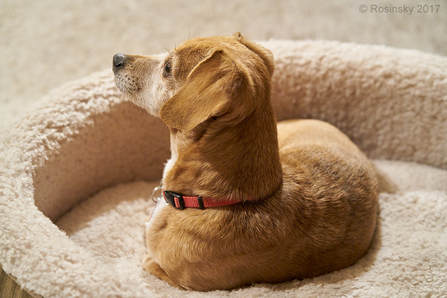
Below is a piece I wrote for my husband's dog photography website many years ago. I'll leave it here as a tribute to Little Guy, my funny, handsome, and tremendously comforting friend. ❤️

Life with the chiweenie.

My husband has a thing for dachshunds. There’s something about their personality—their confidence, their swagger—that he just loves. Not to mention the Cuteness Factor, which is substantial.

So after decades of admiring and photographing the breed, Bob decided he simply had to have a doxie. I consented, as I’ve always recognized that dogs are good for my husband’s mental health. Even though we already had our 40-pound mutt Jazz, Bob had a dearth of dachshunds.

So the search began.

We contacted a number of dachshund rescue leagues, filled out long forms, and participated in interviews. We had to prove ourselves worthy.


I think it was during my conversation with a south Florida rescue league that I began to have second thoughts about adopting a full-blooded dachshund. There was much talk about the potential need for expensive back surgery with this breed. Did we have several thousand dollars on hand? And would we be willing to spend it on our yet-to-be-adopted pet?

Hmmm. Maybe we’d be better off with a dachshund-ISH dog, with a little bit of gene heterogeneity.

​This line of reasoning is what led us to our three-year-old chiweenie—half dachshund, half chihuahua—whom we ended up dubbing “Little Guy.” And this is where our lives were changed.

How to describe our chiweenie? I think it can be summed up in a few words:


  1. Unpredictable. Suddenly, our lives are all about dog poop. We have to take this little mutt out many times a day and pay fanatical attention to his biorhythms. Has the chiweenie gone out? Did he poop? Did he poop more than once? And of course, there are the intermittent infuriating discoveries of unwelcome Indoor Poop.
    ​
  2. Distractible. When this dog goes outside (see item #1), all his senses go on high alert. Is that a dog barking in the next county over? Did someone sneeze two blocks away? Curious chiweenies want to know. Much of this dog’s outdoor time is spent sniffing the air and frowning at various sounds. Windblown bushes are hypnotizing.

  3. Food-focused. This dog will eat anything. Any. Thing. You name it: fruit, vegetables, whatever that is that you just dropped. And of course, he eats our other dog’s food. Thank heavens he’s as short as he is, or he’d clean us out.

  4. Intense. This is not a goofy, carefree dog. No lolling tongue here. This is no Labrador retriever. This fellow will stare at you right in the eyes, demanding, “What is going to happen RIGHT NOW? Will you be getting me some food? Are we going somewhere? What exactly are your intentions?”

  5. Undeniably cute. Why would we tolerate such a needy creature? One that requires so much cajoling and vigilant oversight? That’s easy: he’s adorable. He has a soft coat that you can’t keep your hands off of. He’ll snuggle up to you in a way that makes your heart rate plummet. And he’s got those floppy ears. And that tail! It sticks up in the air and waves proudly wherever he goes, announcing to the world that the chiweenie has arrived. 

​Would Bob adopt this dog again if he’d known what he was getting into? It depends on when you ask. If Bob’s in the front yard, begging Little Guy to go potty? Probably not. But when Little Guy is curled up cozily and snoring on Bob’s lap? Then, I think Bob would admit he’s grateful that this eleven-pound canine character marched his way into our lives.
2 Comments

For the love of small spaces.

11/24/2019

2 Comments

 
Picture
When I was a kid, I had the opposite of claustrophobia. I'd call it claustrophilia, but I don't want to pathologize it. I just enjoyed tucking myself into little hideouts and cozy spots: cabinets, closets, an oversized drawer... even the top of the refrigerator, for a spell. (Maybe I don't want to scrutinize this behavior too much.)

Anyway, this proclivity has carried over to my professional life today. I've discovered that my favorite copywriting challenges are those where space is limited. A billboard that people need to take in while driving 70 miles an hour. A thirty-second radio spot. A digital ad that's half the size of a credit card. The back of a frozen entree. Subject lines. Headlines. Taglines. Tweets.

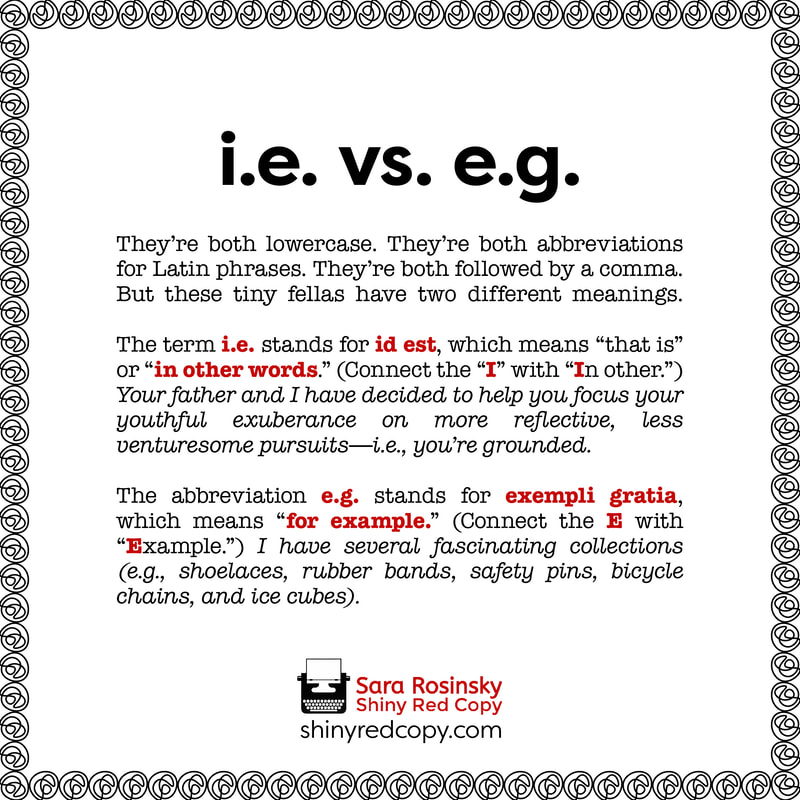
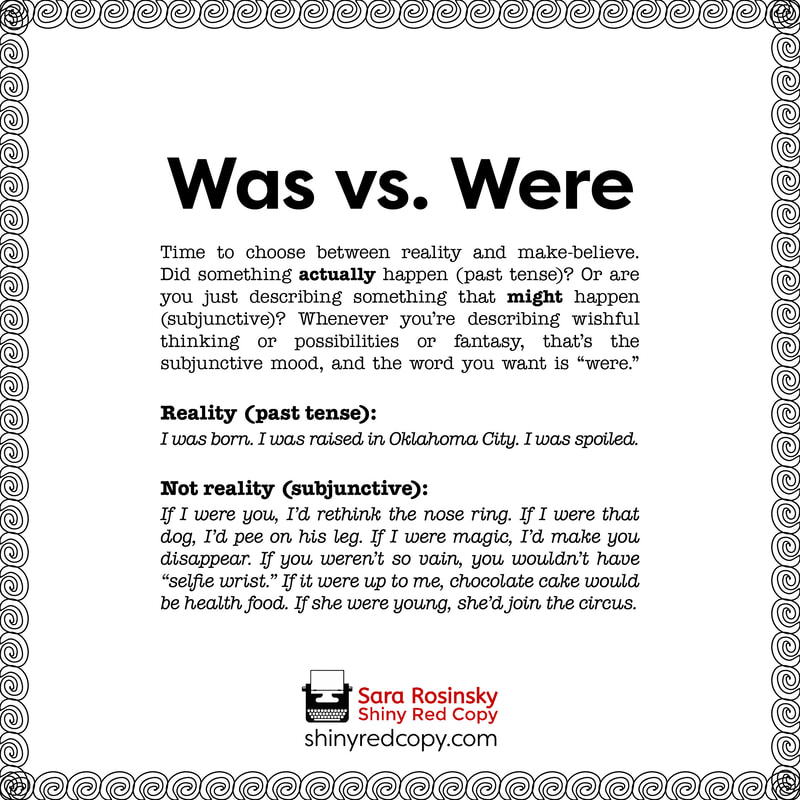
Related: For the past few years, I've been creating little language lessons about grammar, spelling, punctuation, etymology, etc. (See a sampling below.) Each of these social media posts measures only 1080 x 1080 pixels. That's not a lot of room to explain when you should use "loath" instead of "loathe," or how to avoid committing a comma splice. But that restriction is a big part of why I love creating these things. They're like Rubik's cubes. The challenge: How much memorable information can I fit into the square without it feeling like a Dr. Bronner's label?
Now, If you're one of the millions of people who freelance, you've likely heard the mantra that to succeed, you need to "niche down." (Don't ask me to say that out loud—whichever way you pronounce it, you're sure to annoy somebody.) The more specific your expertise, say all the career coaches, the better. You're supposed to specialize in some industry "vertical": dentistry, landscaping, badminton... something.

But I don't want to. I love promoting all sorts of products and services: beer and banks and boarding schools. If I particularly love the work a client does (like Invest in Girls, say), then that's just icing on the cake. (Oh—I've gotten to write lots about cake. And icing.)

So I think that rather than niching down in the usual sense, I'd like to focus on small spaces. I'll take a pass on the long white papers and ebooks. Bring on the ads. The emails. The out-of-home. I want to work on posters and postcards and packaging. Give me a small space, and I will do big things.℠ 
2 Comments

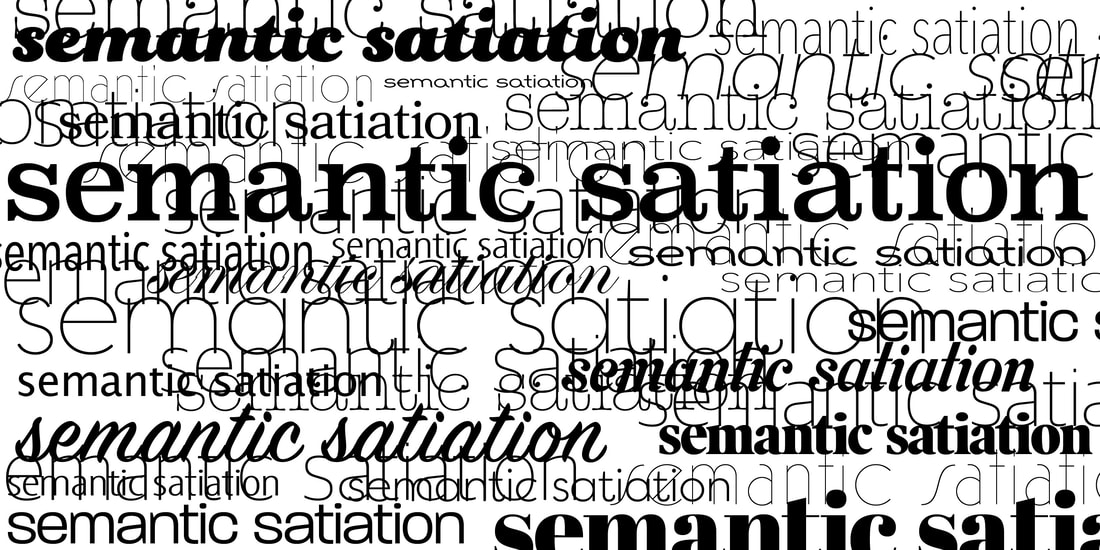
Have you ever suffered from semantic satiation?

9/22/2019

8 Comments

 
Picture
Just now, I was working on an email that includes a lesson about when to use "awhile" and when to use "a while." And after... well, a while, that "while" and "awhile" business started to look mighty weird. Almost like they weren't words at all but just a meaningless collection of letters.

If you've ever experienced such a phenomenon, then you've felt semantic satiation. Instead of paraphrasing the Wikipedia article, I will simply point you there, should you want to learn more about it.​
​If you find this sort of thing entertaining, do check out the related entry about the following, which is a truly legitimate sentence:

Buffalo buffalo Buffalo buffalo buffalo buffalo Buffalo buffalo.
Brown bird on top of black buffalo
Photo by Lewie Embling on Unsplash
​If you didn't know the sensation of semantic satiation before, I'll bet you do now. :)
8 Comments

I'm gonna sit right down and write myself a letter.

7/9/2019

2 Comments

 
Picture
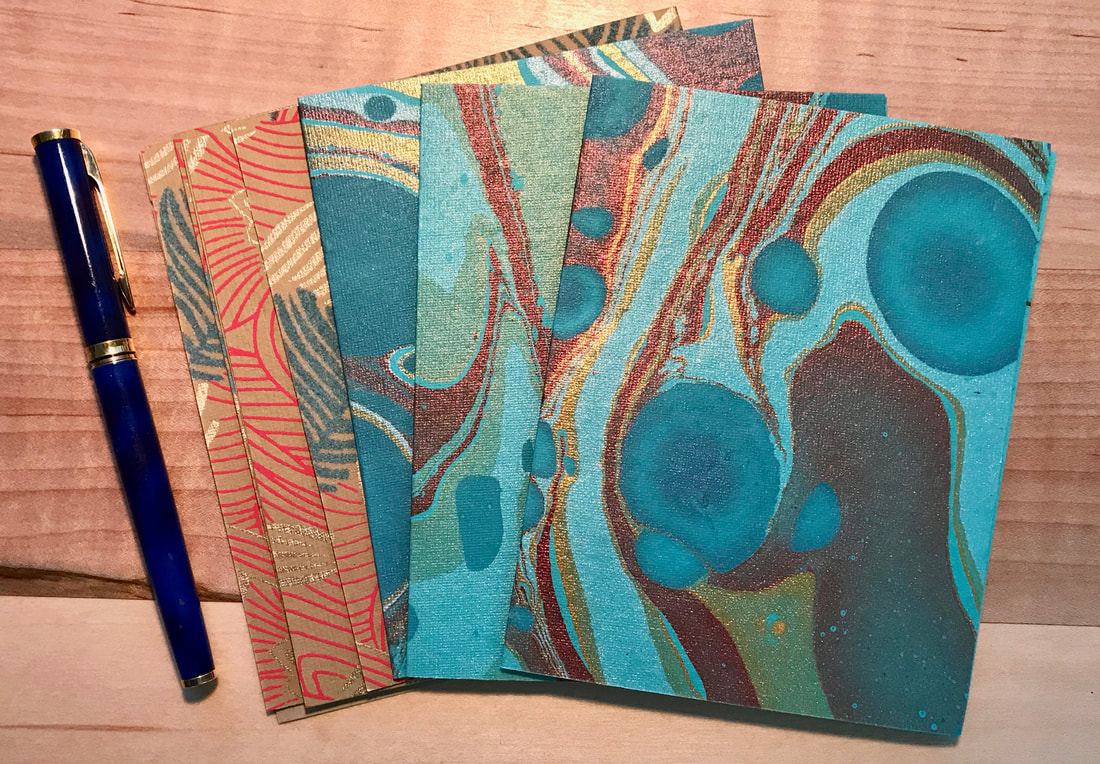
Isn't this stationery gorgeous? It's handmade, from Two Hands Paperie in Boulder, Colorado.
That's the name of a 1935 song I've listened to a zillion times—sometimes as a recording by Fats Waller or Louis Armstrong, but most often, belted out by my father, who (as I've mentioned before) adored that sort of music. (I love this version by the fabulous Boswell Sisters.)

Unlike the protagonist of the song, however, I'm not inspired by romance. My goal is sanity. Or perspective, anyway.

See, I've noticed that, depending on circumstances, I can regard the world in drastically different ways.

When I'm approaching the deadline a large writing project, I can be filled with dread, self-doubt, and self-recrimination (for procrastinating). But then, at some point in the writing process, I find myself thinking, "Say! This is really good! I actually love this!" See the discrepancy there? Persona A: pained, fretting, reluctant victim. Persona B: fortunate, fulfilled, happy professional.

Similarly, when circumstances in my life get troublesome, I catastrophize. I am preternaturally talented at this. I can envision loved ones in prison or dead; I can enumerate all the ways my health might fail. It's not that I truly believe the worst is going to happen, exactly; but I sure can picture it. I have a terrific imagination, which can also be a terrible imagination. Eventually however, when my circumstances improve, I can recognize how silly I've been. I'm flooded not only with relief, but optimism. I admonish The Worrier in me and my whole outlook brightens.

So here's what I'm thinking. Why don't I write myself a letter?

When I'm feeling like a self-possessed copywriting pro, why don't I write a letter to the neurotic, tortured incompetent who will certainly show up at some point? I might set down assurances like, "I know you're nervous. But I promise you with absolute certainty: You are going to be fine, and this project is going to turn out great. Just keep on writing. Every word you type will get you closer to a finished result that you love. Go on."

Similarly, at one of those moments when my temporary troubles abate and I see my way out of doom-filled concern into sunshiny rationality, I should write my former (and future) fretting self: "Just cut it out, worrywart. First, it doesn't do you any good. Second, what you're envisioning is truly preposterous."

If I write to myself, I could help myself.

Come to think of it, though, maybe I don't need to write a literal letter. I believe this blog post will do the trick nicely.

Yours sincerely,

​Sara


2 Comments
<<Previous
Forward>>

    Archives

    January 2026
    November 2025
    September 2025
    May 2025
    February 2025
    January 2025
    December 2024
    September 2024
    August 2024
    May 2024
    December 2023
    September 2023
    March 2023
    December 2022
    November 2022
    October 2022
    May 2022
    April 2022
    February 2022
    October 2021
    September 2021
    August 2021
    July 2021
    June 2021
    April 2021
    January 2021
    August 2020
    July 2020
    May 2020
    April 2020
    March 2020
    November 2019
    September 2019
    July 2019
    June 2019
    March 2019
    February 2019
    January 2019
    December 2018
    November 2018
    October 2018
    September 2018
    August 2018
    July 2018
    June 2018
    May 2018
    April 2018
    March 2018
    February 2018
    January 2018
    December 2017

    Categories

    All
    Advertising & Marketing
    Books
    Boston
    Colorado
    Comedy
    Creativity
    Design
    Dogs
    Etymology
    Florida
    Freelancing
    Language
    My Life
    Oklahoma
    Other
    Podcasts & Audiobooks
    Punctuation
    Skepticism
    Travel
    Typography
    Words
    Writing

    RSS Feed


​Copyright © 2025